
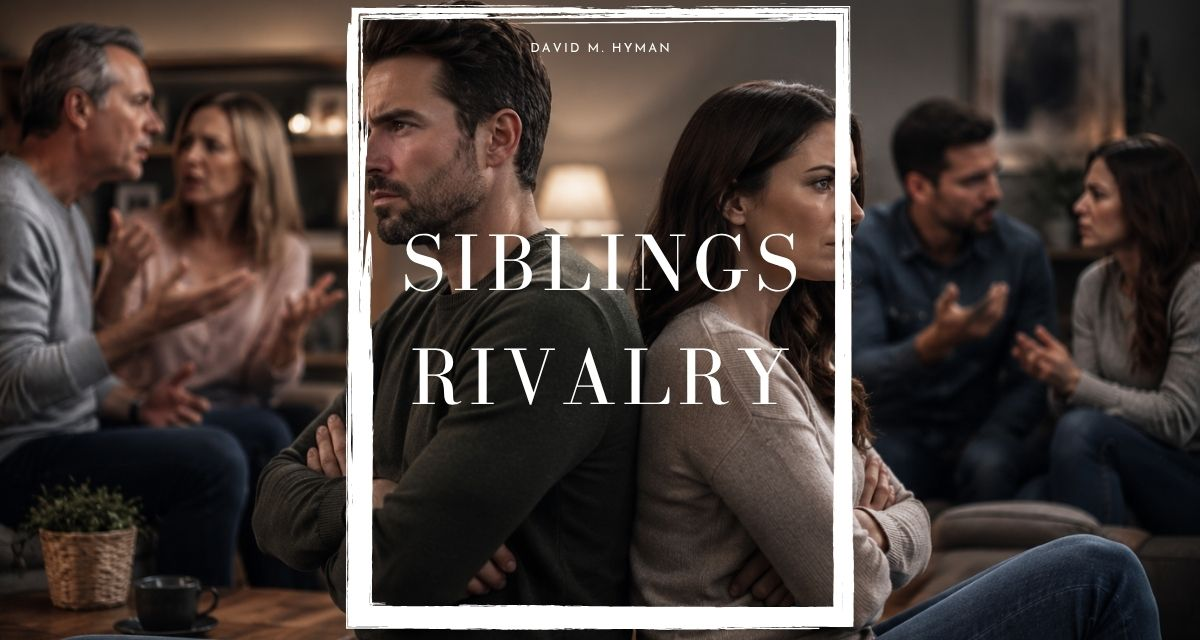
Sibling rivalry is often treated like something people outgrow.
It gets associated with childhood fights, teasing at the dinner table, competition for attention, or arguments over who got the bigger bedroom. But sibling rivalry does not always end when people become adults. In many families, it simply changes form.
Instead of open childhood arguments, adult sibling rivalry may show up as scorekeeping, resentment, sarcasm, exclusion, tension around parents, or conflict that feels strangely out of proportion to the moment. The behavior may look more polished on the surface, but emotionally it often comes from the same place.
What is sibling rivalry in adulthood?
Sibling rivalry in adulthood is ongoing competition, tension, or resentment between adult siblings. It can be rooted in childhood comparison, parental favoritism, unresolved hurt, or long-standing family roles that never fully disappeared.
It does not always mean siblings are constantly fighting. In fact, adult sibling rivalry is often quieter than that. It may show up in the way one sibling dismisses another, withholds support, makes cutting jokes, or keeps score about who gave more, helped more, or mattered more.
In Hyman’s memoir, teasing and imbalance are not treated as small childhood details. They become part of the emotional structure of the sibling relationship and continue to shape how adulthood is experienced.
What are the signs of sibling rivalry in adults?
Adult sibling rivalry can show up in a few common ways.
Constant comparison
One sibling always seems to be measuring life in terms of who did better, who got more, who is more successful, or who is more appreciated by the family.
Competition for parental closeness
This can become especially intense as parents age. Attention, approval, caregiving, decision-making, and perceived loyalty can all become emotionally loaded.
Old teasing that still carries a sting
Some teasing is normal. Some is not. If jokes always come at the expense of the same person, or if the humor keeps reviving an old wound, it may be rivalry hiding under the label of “just kidding.”
The manuscript gives vivid examples of teasing that lasted from childhood into later life, where the joke was less about playfulness and more about repetition, blame, and getting away with it.
Emotional scorekeeping
One sibling remembers every slight, every absence, every unequal gesture. They may not say it out loud all the time, but it shapes the relationship.
Tension around fairness
Adult siblings often become highly sensitive to fairness during stressful family events, especially when a parent dies, care decisions have to be made, or money becomes part of the picture.
That dynamic is clear in Hyman’s manuscript, where conflict escalates around a parent’s death, the handling of the will, and suspicions over fairness despite equal distribution.
Feeling like the same family roles never ended
The favorite child may still be treated like the favorite. The sibling who felt overlooked may still carry that feeling into every interaction. The “responsible one” may feel burdened. The “difficult one” may still feel judged before saying a word.
What does normal sibling rivalry look like?
Normal sibling rivalry usually includes occasional comparison, irritation, or disagreement. It may involve joking, mild competitiveness, or periods of distance. That can happen even in loving families.
What makes it feel less normal is when the pattern becomes chronic.
That might include:
- one person always being the target
- old resentment surfacing in every family event
- unresolved favoritism driving adult behavior
- repeated humiliation disguised as humor
- conflict that never really resets
In other words, normal sibling friction comes and goes. Ongoing sibling rivalry tends to repeat itself.
How sibling favoritism in family affects adult conflict
Sibling favoritism can leave a very long shadow. Even when parents are gone, the emotional impact may remain.
If one child consistently felt protected, praised, or prioritized, the others may carry that memory into adulthood. The favored sibling may not even fully see it. The less favored sibling often sees it everywhere.
That pattern is reflected throughout Hyman’s sibling narrative, especially in passages involving unequal gifts, special treatment, and early family status.
Why sibling conflicts often intensify later in life
Adult sibling conflicts are often more emotionally charged than childhood ones because more is at stake. The conflict may now involve grief, money, care decisions, family loyalty, marriage, or long-standing disappointment.
When a parent dies, when a sibling feels abandoned, or when one person believes they carried more of the emotional load than the others, the rivalry can become sharper very quickly.
That is one reason sibling rivalries in adulthood can feel so confusing. The argument may appear to be about one event, but emotionally it is often about years of accumulated meaning.
Can adult sibling rivalry get better?
Yes, but it usually requires more than time.
People often need to recognize the pattern before they can change it. That may mean admitting that childhood still matters, that some jokes were not harmless, or that one sibling’s version of family life is not the only one that counts.
Improvement can start with:
- clearer boundaries
- more realistic expectations
- less scorekeeping
- more direct communication
- a willingness to stop reenacting the same roles
Repair does not always mean closeness. Sometimes it simply means less tension and more honesty.
Why readers look for books on sibling rivalry
Many people dealing with adult sibling conflict do not just want advice. They want to feel understood.
That is why books on sibling rivalry and books about family dynamics can resonate so deeply. Readers often recognize themselves more quickly in stories than in abstract explanations. They see the patterns, the pain, the humor, and the contradictions.
David M. Hyman’s site describes his work as blending humor, honesty, and reflection, and that balance makes his sibling memoir especially relevant for adults trying to make sense of rivalry, distance, and family memory.
Final thoughts
Adult sibling rivalry is more common than many people admit. It can show up through humor, tension, comparison, resentment, or conflict around family responsibility. Sometimes it looks small from the outside. From the inside, it can shape the whole relationship.
Understanding what sibling rivalry looks like in adulthood is often the first step toward responding to it more clearly. Whether the goal is repair, distance, better boundaries, or simply greater self-awareness, naming the pattern matters.
For readers who want a more personal and emotionally recognizable look at sibling conflict, favoritism, teasing, and family memory, I Am an Only Child, Ask My 3 Sisters offers a memoir-based perspective that feels especially relevant to adult sibling relationships.